
5 Ways to Manage Anxiety at Work
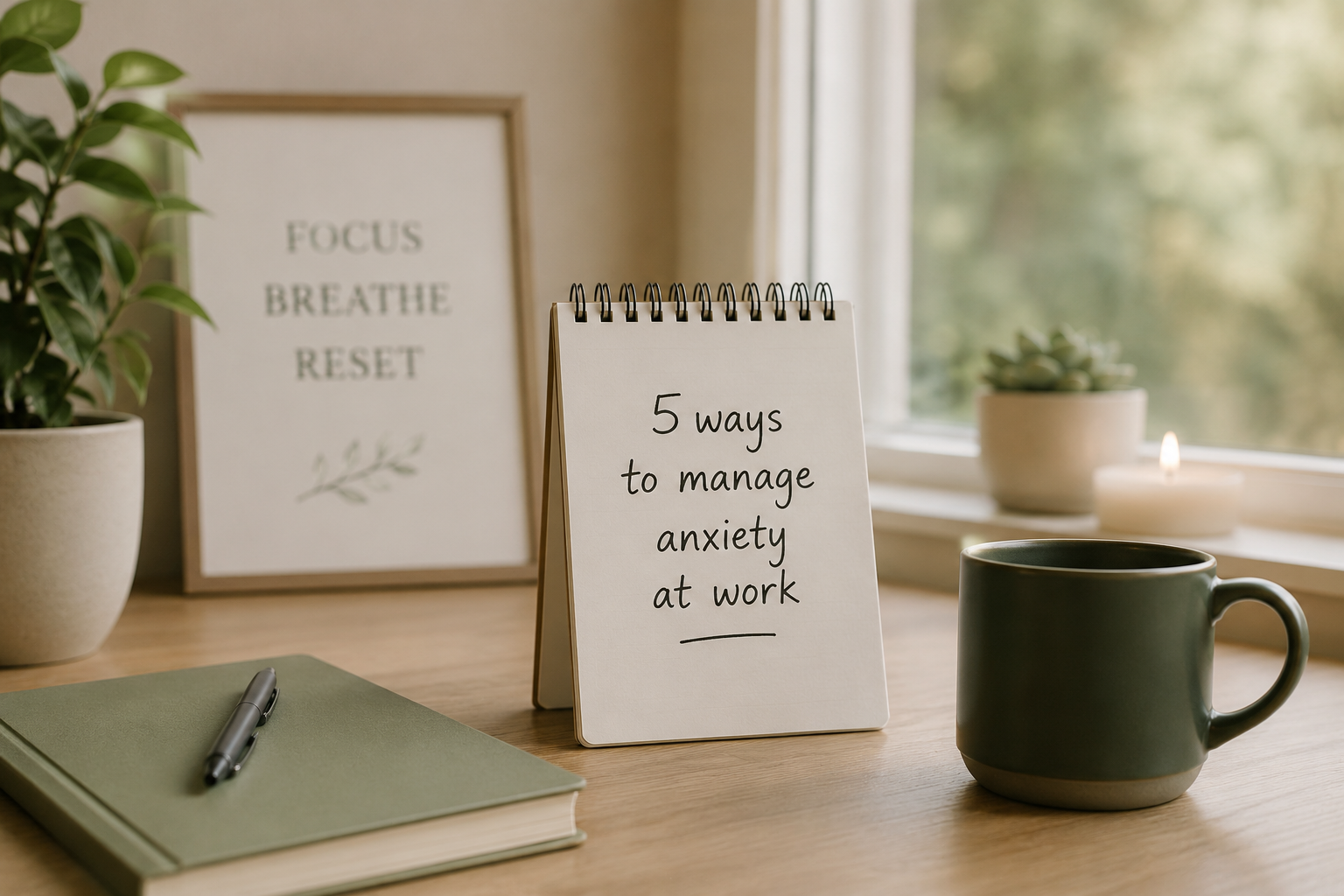
Practical strategies to help you feel calmer, think more clearly and regain control.
By Richard McQuirke
If you've ever driven home from work only to realise you can't remember the journey, lain awake replaying conversations from the day, or felt your stomach tighten before opening your emails on a Monday morning, you're certainly not alone.
Anxiety at work is far more common than many people realise.
For some people, it stems from constant deadlines and heavy workloads. For others, it's the pressure to perform, fear of making mistakes, difficult relationships, organisational change, or simply trying to keep everyone else happy.
The challenge is that anxiety rarely stays at work. It often follows us home, affecting our sleep, relationships and ability to relax.
The good news is that there are practical ways to reduce workplace anxiety before it begins to take over.
Here are five strategies that can help.
1. Notice the Early Signs
Anxiety doesn't usually appear overnight. More often, it builds gradually.
You might notice that:
You're checking your emails repeatedly.
You're constantly worrying about getting things wrong.
You feel tense, restless or on edge.
Your patience is wearing thin.
You struggle to switch off after work.
The earlier you recognise these signs, the easier it is to respond before anxiety becomes overwhelming.
Rather than criticising yourself, simply pause and ask:
"What is my mind trying to tell me right now?"
Awareness is often the first step towards change.
2. Focus on What You Can Control
When anxiety increases, our minds naturally begin focusing on everything that could go wrong.
Deadlines.
Other people's expectations.
Future meetings.
Difficult conversations.
While these concerns may feel real, not all of them are within your control.
Instead, try asking yourself:
What can I influence today?
What can wait until tomorrow?
What is outside my control?
Shifting your attention towards what you can realistically influence often reduces feelings of overwhelm and helps you regain a sense of control.
3. Give Yourself Permission to Pause
Many people believe the answer to workplace stress is simply to work harder.
In reality, our brains aren't designed to remain switched on all day.
Even a few minutes away from your screen can make a noticeable difference.
Consider:
Taking a short walk outside.
Stretching between meetings.
Practising slow, steady breathing.
Making a cup of tea without checking your phone.
Looking away from your screen for a few moments.
These aren't signs of laziness, they're ways of helping your nervous system reset.
Sometimes, slowing down allows you to think more clearly.
4. Set Healthier Boundaries
Modern technology has blurred the boundaries between work and home.
Emails arrive in the evening.
Messages appear at weekends.
It's easy to feel as though you're always available.
Healthy boundaries aren't about caring less about your job, they're about protecting your wellbeing.
That might mean:
Switching off work notifications after hours.
Avoiding emails before bed.
Taking your full lunch break.
Saying "no" when your workload is already full.
Accepting that not everything has to be perfect.
Remember, being constantly available doesn't necessarily make you more productive. It often leaves you exhausted.
5. Talk to Someone
One of the most difficult things about anxiety is that it often convinces us we should deal with everything on our own.
In reality, talking to someone you trust can make a huge difference.
That might be:
A friend.
A family member.
A trusted colleague.
Your manager.
A counsellor.
Simply putting your thoughts into words often reduces their intensity.
Counselling provides a calm, confidential space to explore what's contributing to your anxiety, understand your patterns of thinking, and develop practical ways to manage them.
You don't need to be in crisis before reaching out.
Remember…
Feeling anxious at work doesn't mean you're weak.
In fact, many people who experience workplace anxiety are highly conscientious, hardworking and deeply committed to doing a good job.
The very qualities that make someone reliable can also make them vulnerable to carrying too much for too long.
Recognising when you need support isn't giving up, it's taking care of yourself.
You Don't Have to Carry It Alone
If work is leaving you feeling overwhelmed, constantly on edge or unable to switch off, counselling can help you make sense of what's happening and find a healthier way forward.
You don't have to have all the answers before reaching out.
Sometimes, the first conversation is simply the beginning of feeling more like yourself again.