
Signs You Might Be Heading Towards Burnout
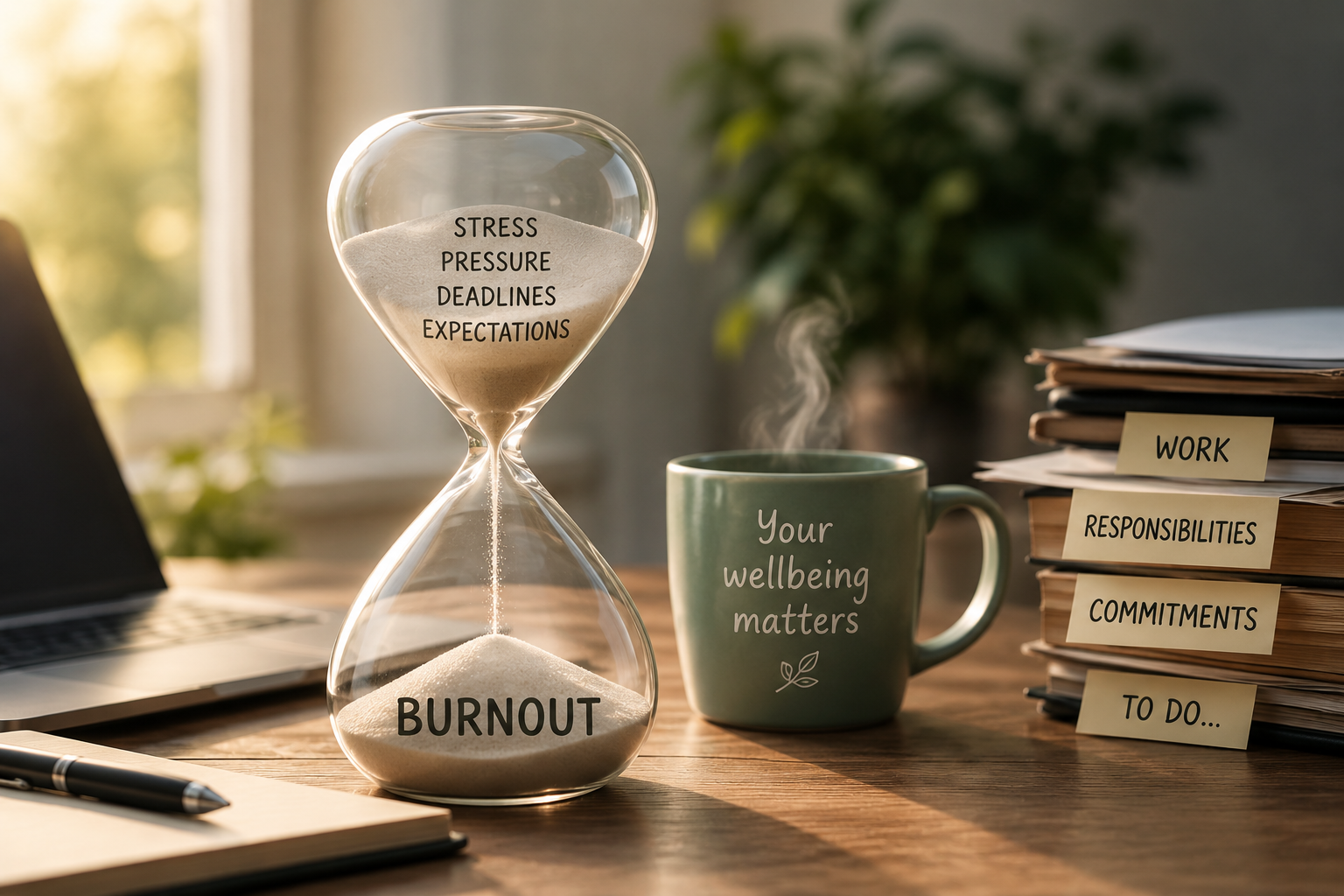
Burnout doesn't happen overnight. It develops quietly, and often while you're still performing well.
By Richard McQuirke
One of the biggest misconceptions about burnout is that it only affects people who have "given up."
In reality, burnout often begins while you're still showing up every day, meeting deadlines, supporting others and doing everything expected of you.
From the outside, you may appear to be coping.
On the inside, you're running on empty.
Burnout is recognised by the World Health Organisation as an occupational phenomenon resulting from chronic workplace stress that hasn't been successfully managed. But it isn't just about work. Caring responsibilities, family pressures, life events and constantly putting other people's needs before your own can all contribute.
The earlier you recognise the signs, the easier it becomes to make meaningful changes before complete exhaustion takes hold.
What is burnout?
Burnout isn't simply feeling tired after a busy week.
It's a state of physical, emotional and mental exhaustion that develops gradually over time.
Many people describe it as feeling as though they're functioning on autopilot. They're still getting through each day, but everything feels harder than it used to.
Unlike ordinary stress, burnout doesn't disappear after a good night's sleep or a relaxing weekend.
Early signs you shouldn't ignore
Burnout often whispers long before it shouts.
Here are some of the early warning signs.
You're constantly exhausted
Not just physically.
Emotionally.
Mentally.
You wake up tired, rely on caffeine to get through the day and never quite feel rested.
You can't switch off
Work follows you home.
You replay conversations.
You worry about tomorrow.
Even when you're sitting on the sofa, your mind is still at work.
Everything feels like hard work
Tasks that once felt manageable now seem overwhelming.
Simple decisions become difficult.
Your motivation starts to disappear.
You're becoming more irritable
Small inconveniences suddenly feel enormous.
You find yourself snapping at colleagues or loved ones.
Your patience becomes much shorter than it used to be.
You feel detached
You stop enjoying the things that normally make you happy.
Friends invite you out and you decline.
Hobbies lose their appeal.
You begin feeling emotionally numb.
You're making more mistakes
Concentration becomes difficult.
You forget things.
You lose your train of thought.
You find yourself reading the same email several times.
Why high performers are often most at risk
Many people assume burnout happens because someone isn't coping.
Ironically, it's often the opposite.
Burnout frequently affects people who are:
Highly conscientious
Reliable
Caring
Responsible
Perfectionistic
Used to putting others first
These qualities are strengths.
But without healthy boundaries, they can also become vulnerabilities.
If you constantly take on more, struggle to say no or feel guilty when you're resting, your risk of burnout increases.
Burnout affects more than your work
Many people first notice burnout in their personal lives.
You may find yourself:
Feeling emotionally distant from people you care about.
Becoming impatient at home.
Losing interest in hobbies.
Sleeping poorly.
Feeling guilty for resting.
Wondering why you don't feel like yourself anymore.
This can be confusing because, on paper, everything may appear to be going well.
Yet inside, you're simply exhausted.
Can burnout be prevented?
Yes, but prevention starts with recognising what's happening.
Some helpful steps include:
Listen to your body
Constant fatigue isn't something to ignore.
Your body often notices the problem before your mind does.
Set realistic boundaries
Not every email needs answering immediately.
Not every request has to become your responsibility.
Protecting your wellbeing isn't selfish, it's essential.
Make time for recovery
Rest isn't something you earn after you've exhausted yourself.
It's something your mind and body need in order to function well.
Recovery isn't laziness.
It's maintenance.
Talk about how you're feeling
Burnout often convinces people they should keep going.
Talking to someone can help you make sense of what's happening before things become overwhelming.
When counselling can help
Burnout isn't a sign that you've failed.
It's often a sign that you've been carrying too much for too long.
Counselling provides a calm, confidential space to slow down, understand what's contributing to your exhaustion and explore healthier ways of moving forward.
Together, we can look beyond the symptoms and help you reconnect with what matters most to you.
You don't have to wait until you're at breaking point
One of the most important things to remember is that you don't have to be completely burnt out before asking for help.
If you're noticing the signs in this article, it may be your mind and body asking you to pause.
Burnout doesn't mean you're weak.
It often means you've been strong for too long.
And with the right support, recovery is possible.